

Timely Monitoring and Sewer Leak Discovery on Burnt Fork Creek
By Michelle Smith
When I started my new role as the Program Manager with South Fork Conservancy in August, I was very excited to spend time outside and take part in stewarding the South Fork of Peachtree Creek watershed. These streams are the connecting threads in the community where I live, and I have been eager to learn more about them. In September, I began the process of obtaining water monitoring certifications through Georgia Adopt-A-Stream. Fortunately, I was able to connect with colleagues who have monitoring experience, and kindly offered a chance for me to take some samples with them.
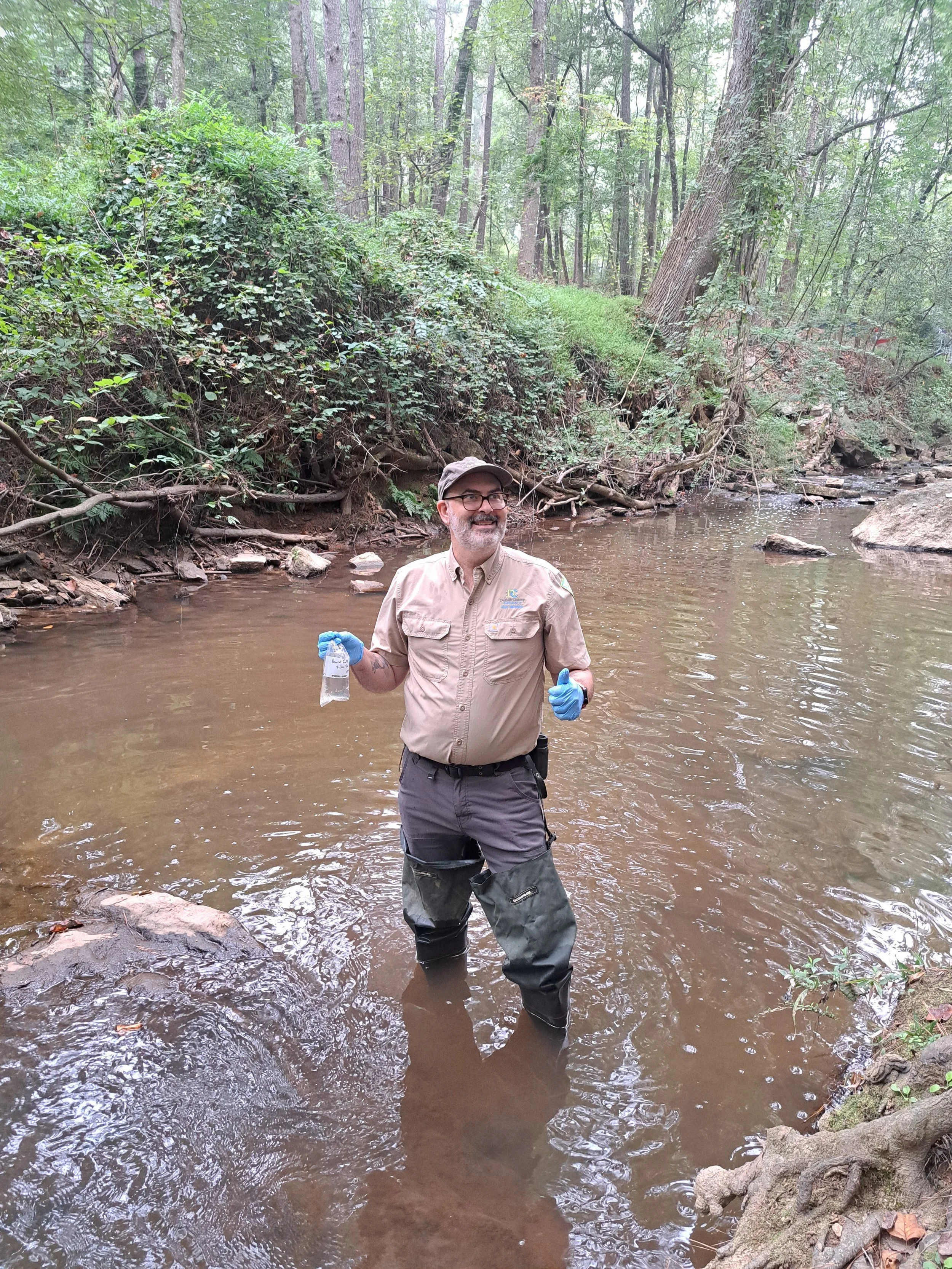
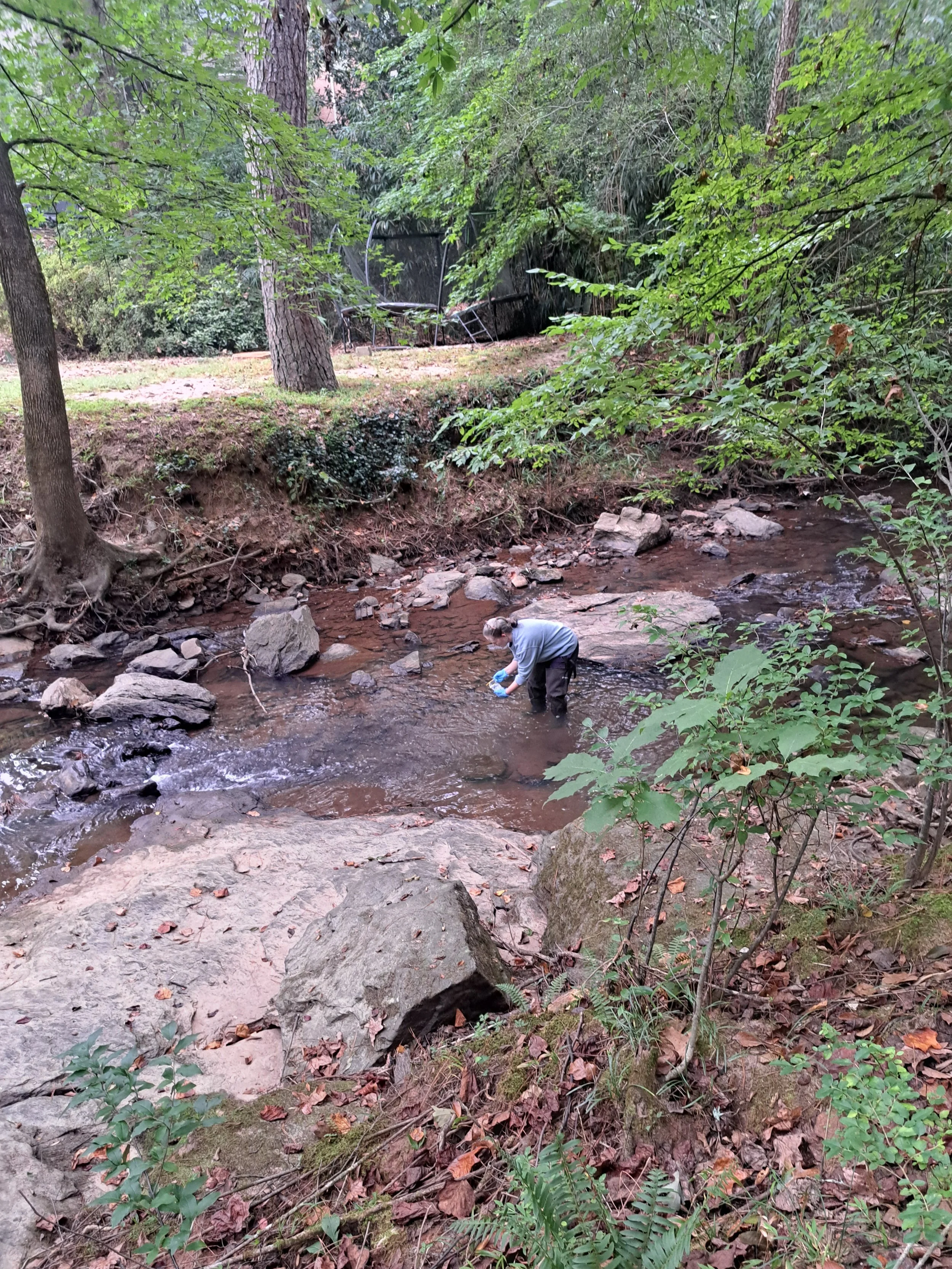
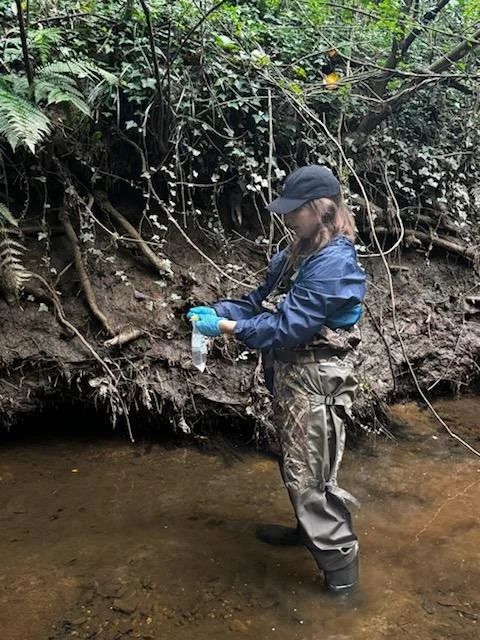
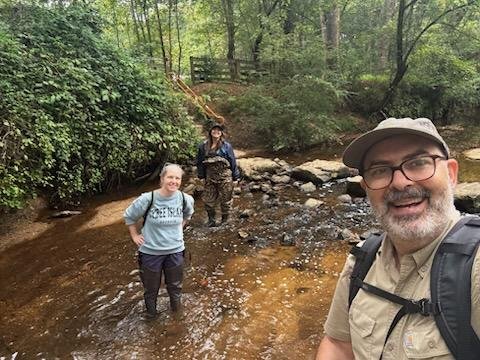
I was excited to reconnect with Ranger Jonah McDonald, a Georgia Beloved Naturalist founder and educator, and Katie Paden, GBN ‘23 alum, Program Manager and SFC Advisory Board Member. In 2025 while I earned my GBN certificate, they both helped shape many of the positive experiences I had during my cohort. I was thrilled when we found an opportunity to don some waders and put some of my newly acquired water-monitoring skills into practice. Katie and Jonah have been consistently monitoring water through Georgia Adopt-A-Stream, collecting macro-invertebrate and chemical data for the past two years. Adding bacterial monitoring seemed like a natural next step in understanding the health of the waterways.
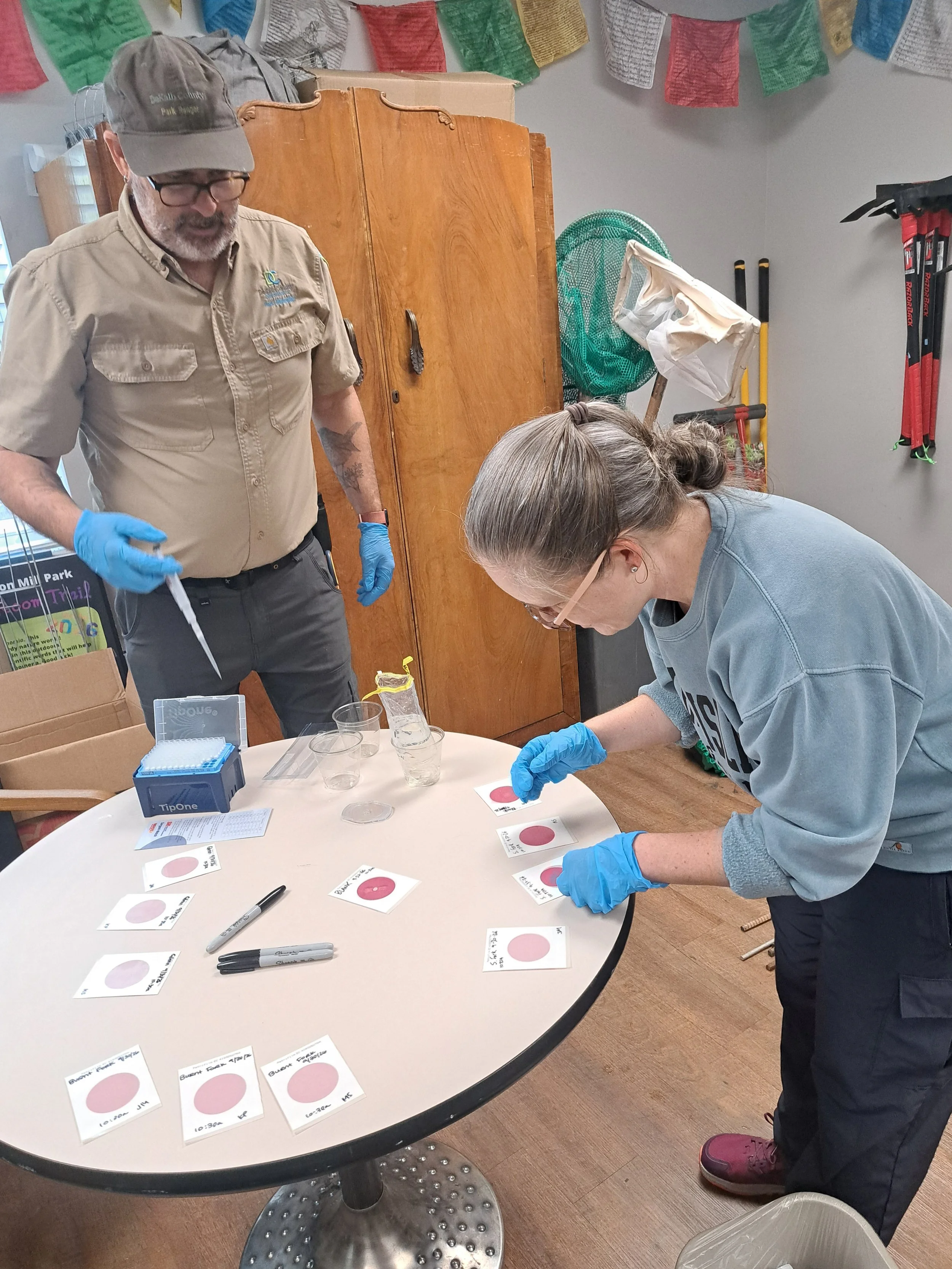
On Wednesday, September 30, we gathered at Mason Mill Park to test a new bacterial monitoring kit at three sites: Burnt Fork Creek, Glenn Creek, and the South Fork of Peachtree Creek. These three creeks converge within the park and provide habitat for an abundance of wildlife: river otters, snapping turtles, crayfish, and blue herons, to name a few. We started sampling at Burnt Fork Creek. At first glance, everything looked normal. The stream beneath the stone bridge seemed clear and flowing as expected. We moved on to collect our samples from the upstream currents in Glenn and South Fork and continued walking the creek, noticing changes in the stream bed from rocky to muddy terrain, observing fish swimming among us, and chatting about sampling methods. After we returned from the park, we prepared our bacterial test slides and placed them in the incubator, looking forward to seeing what they would tell us the following day.
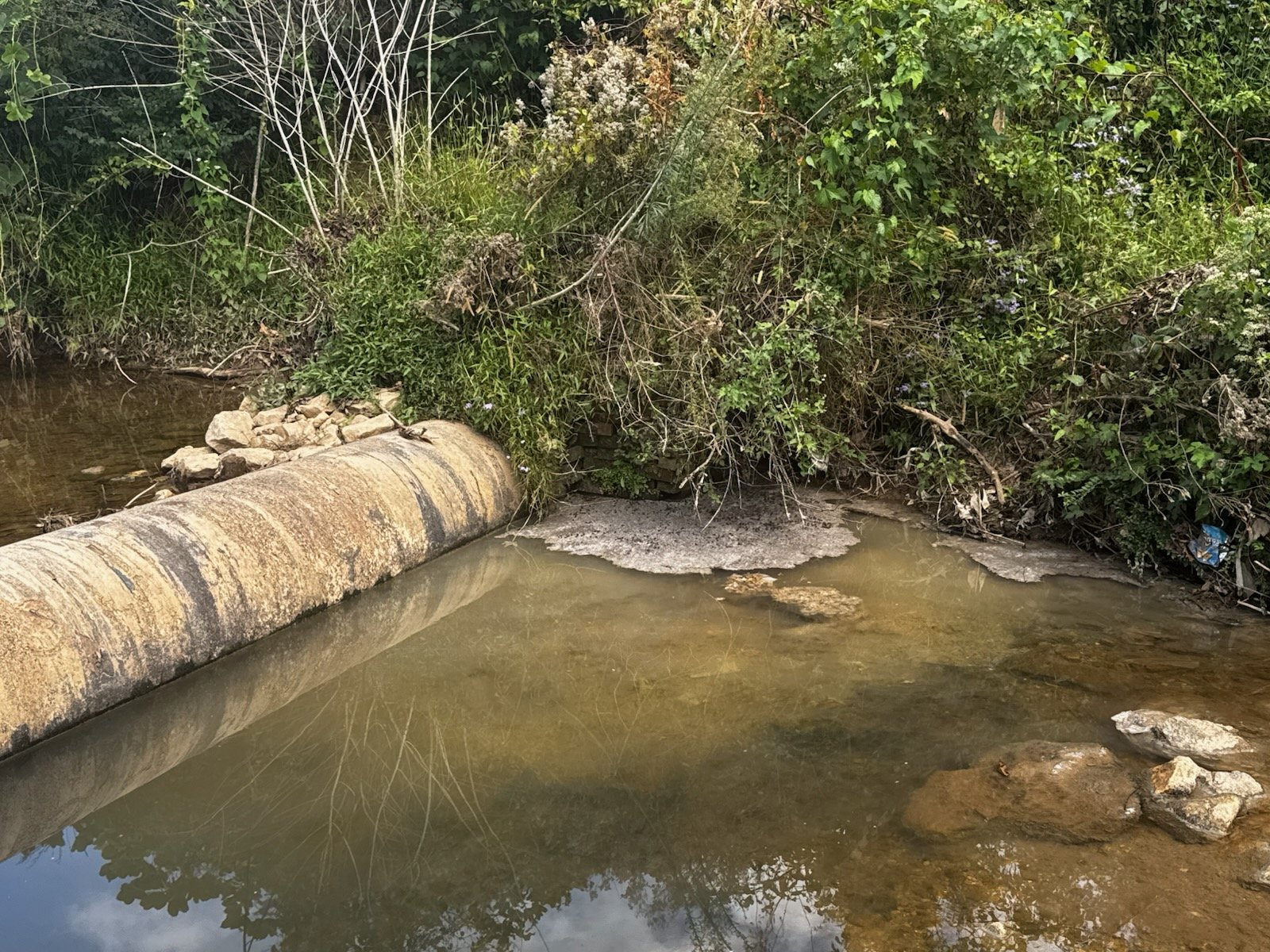
The next morning, Thursday, October 1, Burnt Fork Creek's bacterial results looked dramatically different from those of the other two creeks. After analyzing the samples, we found that the E. coli results were TNTC-“too numerous to count.” Because this was our first bacterial sample at the site, we knew we needed to consider the possibility of an unusual result and confirm what we were seeing. Still, we all felt that it was concerning and began discussing plans to check the sewer lines and conduct more water tests. I had a meeting with the SFC Eco Committee right afterwards, and shared our findings.
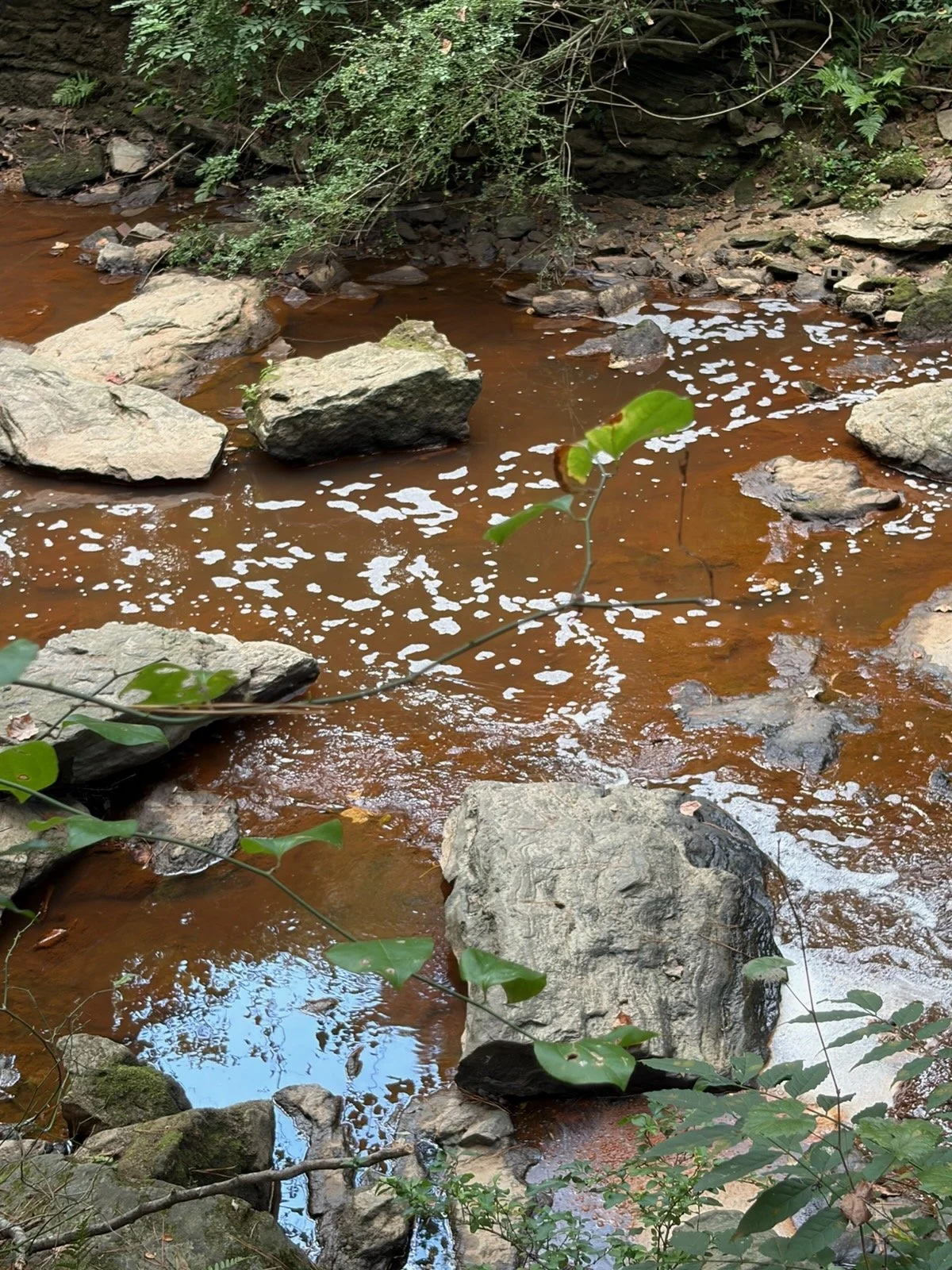
Lisa Perras Gordon, a retired EPA scientist and SFC Board member, was walking with a friend at Mason Mill Park later that day. They observed that the water in Burnt Fork Creek had turned a red-brown with foam floating along the surface. Wildlife, like fish, were already showing signs of distress in what was likely oxygen depleted water. Signs of a sewage leak were apparent, and we were all alarmed at how quickly the conditions had changed since our sampling just the day prior. Ranger Jonah immediately went into action. Because of his extensive knowledge of Mason Mill Park and the location of its sewer infrastructure, he was able to locate the leaking pipe on Burnt Fork Creek, just downstream of North Druid Hills. He quickly contacted DeKalb Watershed Management’s emergency services, and crews responded right away. By Saturday, the leaking pipe had been fully replaced and thankfully, the creek is already beginning to run clear again.
Seeing how quickly a water monitoring result led to action and, ultimately, the repair of a damaged sewer pipe was a striking reminder of why this work matters. I am encouraged by the change that can happen when we take the time to get curious about our environment, share our knowledge and resources, and take action!
If you ever see significant changes in our local streams such as a big change of color, the presence of flushables, like toilet paper, or a very distinctive sewer smell, you can contact local Watershed Emergency numbers:
Dekalb: 770-270-6243 Atlanta: 404-546-0311
For information on Georgia Adopt-A-Stream, visit https://adoptastream.georgia.gov/
For information on Georgia Beloved Naturalists, visit https://www.belovednaturalist.org/