South Fork Conservancy Leads Effort to Restore Portion of Peavine Creekbank in Emory Village

If you’ve ever enjoyed the South Fork Conservancy’s Duck Race during Emory Village’s Open Streets celebration, you know about Peavine Creek. But you may not know that this tiny gem of a creek is in big trouble. That’s because heavy rains have caused extensive erosion of the creek banks, dumping runoff into the creek, and setting up a cascade of events that are choking off its life.
 
The disrupted soil allows invasive plants, like the strangler vine kudzu, to proliferate. Consequently, access to the creek for maintenance is both difficult and treacherous, and mounds of trash and debris pile up under the bridge at North Decatur Road. It doesn’t have to be this way.

Transformed Peavine Creekbank in Emory Village

With input from Druid Hills residents, the Conservancy came up with  a plan to restore a portion of the creekbank to health so that Peavine becomes a natural amenity in the village and the crown jewel of the watershed that it serves. The plan calls for 1) stabilizing the creekbank in Emory Village near the Panera Restaurant to establish safe access for maintenance; 2) installing a trash trap and rain garden to slow down and absorb storm water; 3) planting native trees and plants; and 4) building an overlook so that people can appreciate the treasure that Peavine is.

South Fork’s Executive Director Kimberly Estep and Board members Dave Butler and Mike St. Louis meet with landscape architect Patrick Hand to discuss restoration plan.

The  Coca Cola Company, Hammersmith, the Druid Hills Civic Association, and other donors financed the initial phase of this project that produced engineering and planning documents and a topographical survey of the area. The survey includes an inventory of existing trees, land contours, and drainage patterns. It also confirmed limitations, such as easements, setbacks, and waterway restrictions, that govern how this area could be managed.
 
Most recently, a design team comprising engineers, analysts, landscape architects, regulatory officials, and volunteer advocates researched required permits.The next step is an engineering analysis of a "no-rise" certificate to confirm that implementing the plan will not adversely affect the floodway.
 
To make the plan a reality will require additional funding of about $40,000 from local businesses and all those in the community interested in preserving, protecting, and enjoying this precious natural resource for years to come. If you would like to donate to this project, please contact the Conservancy’s Executive Director, Kimberly Estep, at kimberly@southforkconservancy.org.

Peachtree Creek to Benefit From Stormwater Project at Cheshire Farm Trail

In late January, Atlanta’s Department of Watershed Management (DWM) broke ground on a massive $145 million stormwater diversion system along the North Fork of Peachtree Creek near I-85 and Lindbergh Drive. The system will hold up to 15 million gallons of combined runoff and raw sewage, so sewage won’t spill into and pollute the creek during heavy rains.

Rendering of trail deisgn.

DWM will place the holding tank below the I-85 overpasses. An overflow pump will sit directly above the current Cheshire Farm Trail that edges the creek’s North Fork. The trail will be closed for about three years. DWM will replace the trail with a 12-foot-wide paved walkway stretching from Lindbergh Drive to Cheshire Bridge. The city will also install an overlook, lights, a security camera connected to the police department, and native plants and trees.
 
“It may be a bit of an inconvenience for a few years, but everybody in Atlanta wins once Peachtree Creek is no longer at risk from stormwater and sewer overflows,” said John Spangler, chairman of the South Fork Conservancy. “We wholeheartedly support the project and can’t wait to picnic alongside the clean creek.”
 
The diversion is the largest stormwater project undertaken by Atlanta since a federal judge ordered the city to clean its water in 1998. The consent decree requires Atlanta to separate its water and sewage systems to prevent raw sewage from contaminating waterways.
 
For more information, contact DWM’s Public Information Officer, Bruce Morton, at 404-546-3392 or bkmorton@atlantaga.gov.

What’s Blooming Along the South Fork?

As you walk along the South Fork trails at Zonolite, Peavine, or the Confluence, keep your eye out for flowers that are in bloom right now.  If you’re stumped about the name of a plant, you can check out the plant on the INaturalist app.

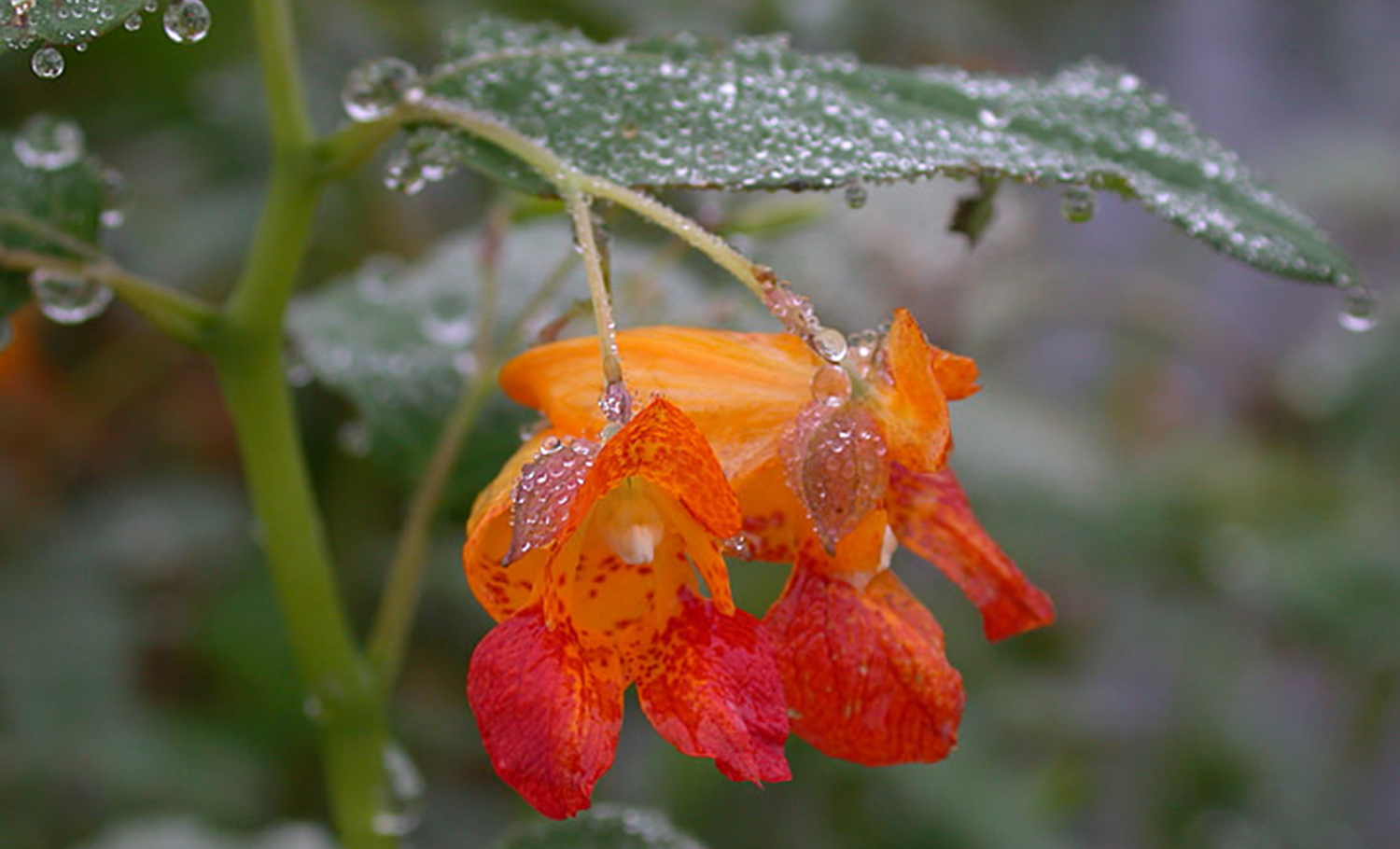
Jewelweed

This annual plant grows along wet, shady areas of the South Fork. Its scientific name is Impatiens capensis.  Jewelweed blooms from June to October. Hummingbirds and butterflies are attracted to these showy flowers for their nectar.

Native Americans used the watery jewelweed juices to relieve itching and irritation associated with poison ivy, stinging nettle, and insect bites. Jewelweed was also used as an eye medicine, a diuretic, a burn dressing, and a yellow/orange dye. 

Coreopsis

In the language of flowers (floriography), Coreopsis means “always cheerful.” These delightful natives of the Americas are part of the colorful pallet in the Confluence Garden along the South Fork.

The common name for coreopsis is tickseed, named because the seeds look like ticks.  Coreopsis flowers have been commonly used as natural dyes. Before the introduction of coffee into their culture, indigenous people boiled the flowers into teas. As you walk  past the Confluence, you’ll see coreopsis blooming in June and into the summer.

Elderberry

Elderberry is a tall plant found along stream marshes, moist forests and disturbed areas. There’s a lovely stand of elderberry that you can see when you stand on the Confluence Bridge. Its scientific name is Sambucus canadensis.

Spring flowers are followed by a purple-black drupe that is produced in drooping clusters from late summer to fall. The drupe is an edible fruit, and when cooked can be used in pies, pancakes, and jellies. Elderberry flowers and fruits are also used in winemaking. Wildlife enjoy the fruits, and the branches provide a habitat for nesting birds. 

In some traditions, the elderberry tree is thought to ward off evil and give protection from witches, whereas other beliefs say that witches often congregate under the plant, especially when it is full of fruit.

Here's a recipe for elderberry liquor.
(Compliments of Molly Hanna, South Fork intern in 2022)
Remember these safety tips before collecting any wild plants.

Ingredients

  • 1 large or two small lemons, washed and sliced into rounds

  • 20-30 fresh elderflower clusters with the blooms cut from the thicker stems

  • 1 750 ml bottle of vodka

  • ½ cup honey or sweetener to taste

Preparation

  • In a large glass or metal pitcher or quart-size mason jar, add elderflowers to 2/3 or almost full

  • Pour vodka over the top and then add slices of lemon to weigh down the flowers

  • Stir well to combine, and cover container with cling wrap

  • Place container in a cool, dark place for 2-4 weeks

  • Strain out lemons and flowers which can be composted

  • Add the honey or other sweetener and shake well or stir to combine

  • Add additional sweetener as needed

  • Bottle as desired

  • Can be consumed at this point or kept to age