

A Creek Runs Through It
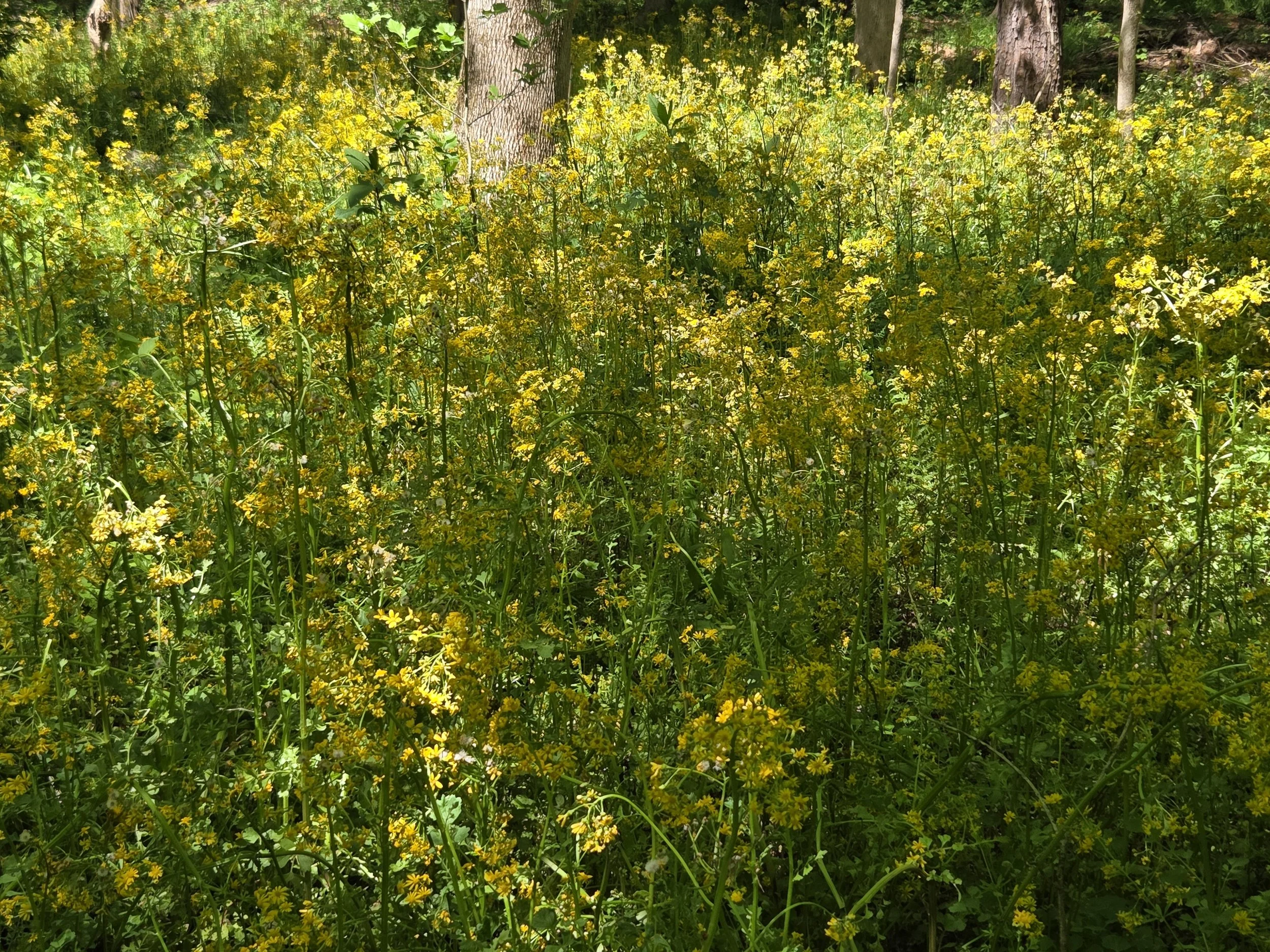
Butter weed blooming in the meadow.
Zonolite Park is a 13-acre area featuring an old-growth forest, sunny meadow, and a pond. The park has a mile and a half of gravel trails, 30 raised garden beds for community gardeners, and a new children’s playground creatively crafted from tree stumps. The South Fork of Peachtree Creek runs through it, and visitors can easily access its sandy banks where water-loving wildlife—birds, fish, frogs, and more—can be observed.
Insulation was once manufactured on this property, resulting in an asbestos-contaminated brownfield. In 2010, nearby property owners and South Fork Conservancy initiated a request to the Environmental Protection Agency that resulted in a three-year, $2 million cleanup effort that removed the toxic waste and resulted in the creation of the park. The park entrance is located on Zonolite Place, near the intersection of Johnson Road and Briarcliff Road in DeKalb County, which manages the property.
A conversation with Pete Densmore, leader of the Friends of Zonolite Park
How did you get interested in this particular park and decide to spearhead the volunteer efforts?
I became involved when I was looking for a place to garden. When I found the garden at Zonolite, it was just 9 empty garden beds and a pile of compost. When I was able to track down who to speak with about gardening, I ended up with Kimberly Estep (former Executive Director of South Fork Conservancy.) She was looking for someone to get the garden going—so I did! I knew there was a significant demand for it because I checked out several other community gardens that were all full. That was around 12 years ago.
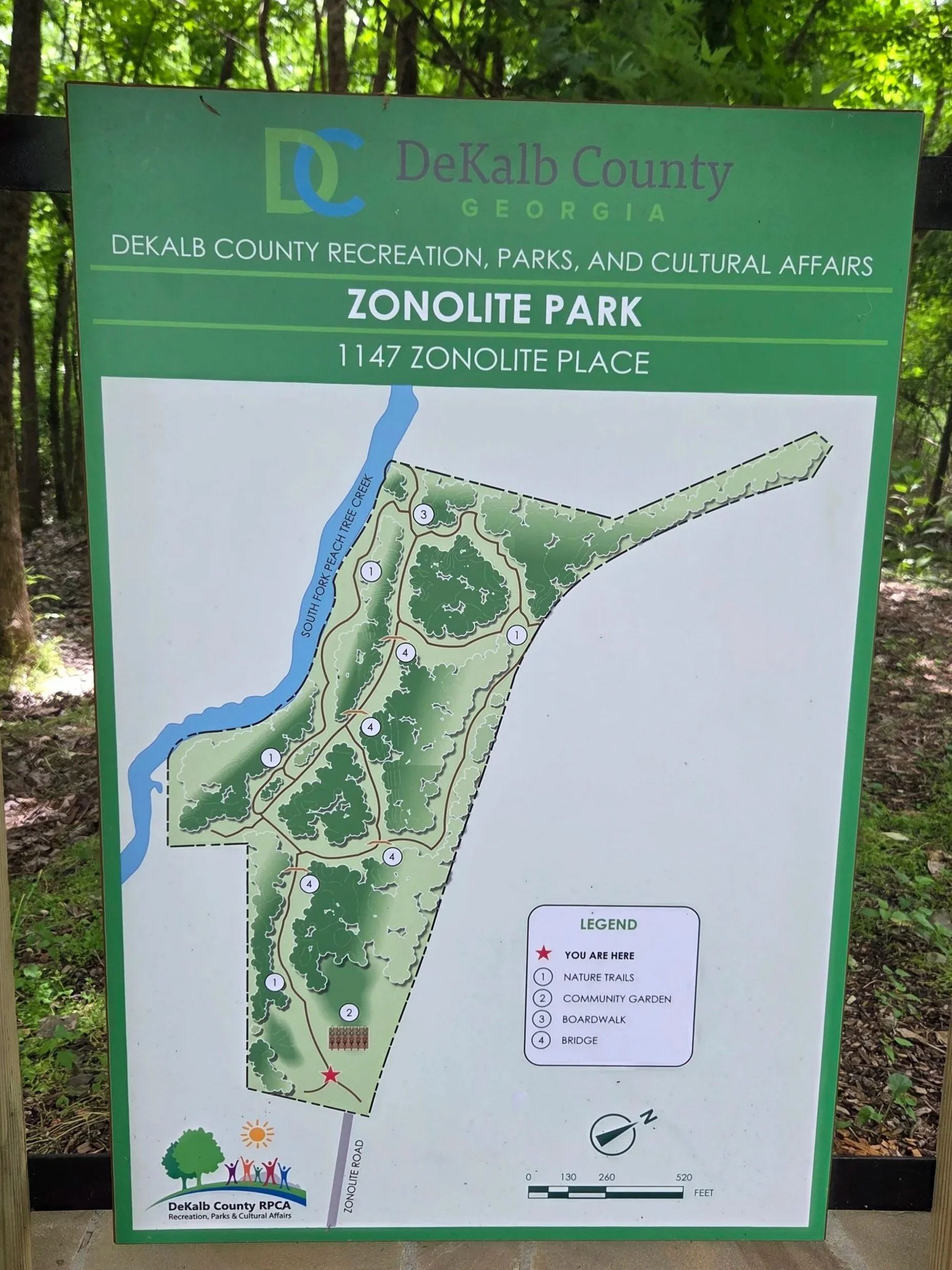
A map of the park and trails.
How many active participants or members do you generally have?
We have 28 individual gardeners—with a waiting list. For most workdays we have around 5-6 volunteers. We do have a couple of large volunteer days throughout the year. Cox is generally one, and the other is through Hands on Atlanta on MLK day.
What kinds of tasks do the volunteers perform?
Our volunteers perform many tasks. All 30 garden beds were built and filled by volunteers. Volunteers plant and maintain the zinnia flower beds and the two community herb beds. Mulching the garden every year is done with volunteers. Volunteers lead many of the projects associated with grants. For example, the kids play area was built over the last few months. Volunteers designed the play area and added the mulch. The volunteers worked with a tree company to get donated logs and labor. The Friends group paid another tree company to complete the effort—by placing additional logs, creating a tic-tac-toe board, a children’s table and chairs, and a balance beam, etc. The volunteers also perform some maintenance tasks—such as replacing boards to keep the bridges in good shape. They have planted hundreds and hundreds of native trees, shrubs and perennials in the park. I could go on.

Community gardener Laura Markson with Friends of Zonolite leader, Pete Densmore.
Does your group have short or long-term goals or plans for the park?
We informally define annual goals, defined as projects, to determine funding and required labor. For example, we defined the projects for 2025, we worked with DeKalb County to get their approval, and then applied for a Park Pride grant to fund those projects. The Park Pride grant was $25,000 and we had to match it—so in total the project provided $50,000 of value in park improvements. Much of the match was in-kind, such as the county provided boulders, graded the parking lot, and provided pallets of mulch. Boutte Tree donated around $4,400 in logs and labor. We had over 50 volunteers on MLK day for 2.5 hours. Each hour is valued at a little more than $30, and The Friends of Zonolite contributed around $7,500 in cash made possible by a contribution from Asana Partners to the Friends of Zonolite.
The tasks completed as part of the grant included:
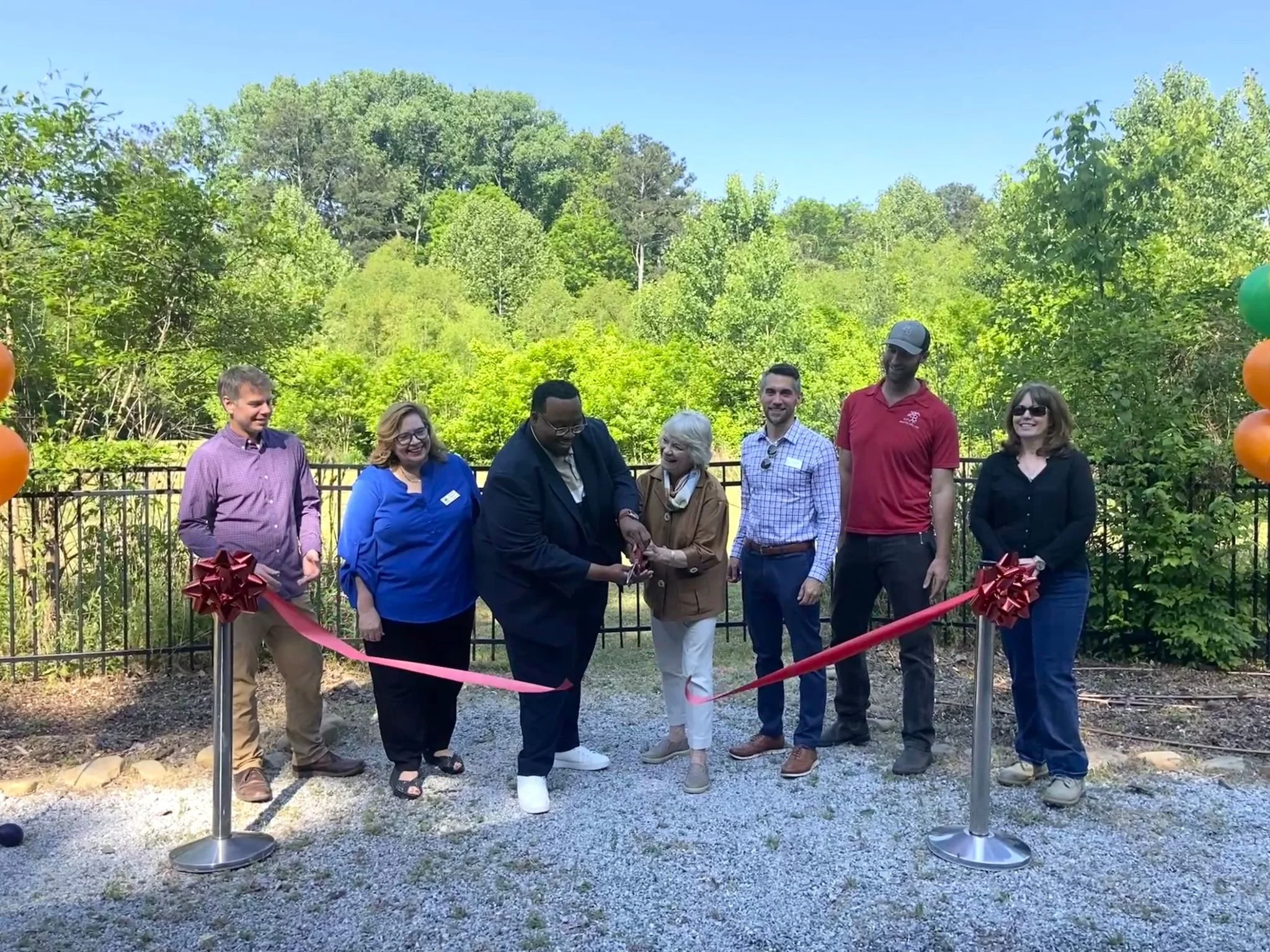
Ribbon cutting at the park for the most recent improvements.
New signs (entrance and map) replaced the existing park entrance sign that was falling down and added a new sign with a map of the park,
Fencing the half of the garden that was not yet fenced in, keeping animals out and providing a backdrop for planting flowers,
The split rail fence that was missing rails and posts was replaced - dividing the parking lot from the park,
Two benches were installed, allowing individuals to linger in the park to enjoy the natural surroundings,
Boulders were installed along the trail in the front of the park, providing a new a seating area,
Mulching the main trail into the park, making it clear where to enter the park,
Grading the parking lot which fixed potholes and making all parking spots available, even after a rain,
A natural play area was built to engage kids, climbing and stepping on logs and boulders, that will be a new experience for many kids,
Many invasive plants were removed, allowing native plants and wildlife to thrive, and
Three old garden beds were rebuilt with new lumber so the garden beds can continue to be used.
We also defined garden improvements. For 2026 that was to replace the last two original garden beds, as they were rotting, and to replace the compost pile. We applied for a $1500 grant from Food Well Alliance to fund those two efforts.
Our long-term goal is fairly simple: Eliminate as many invasive plants as possible and plant as many native plants as appropriate.
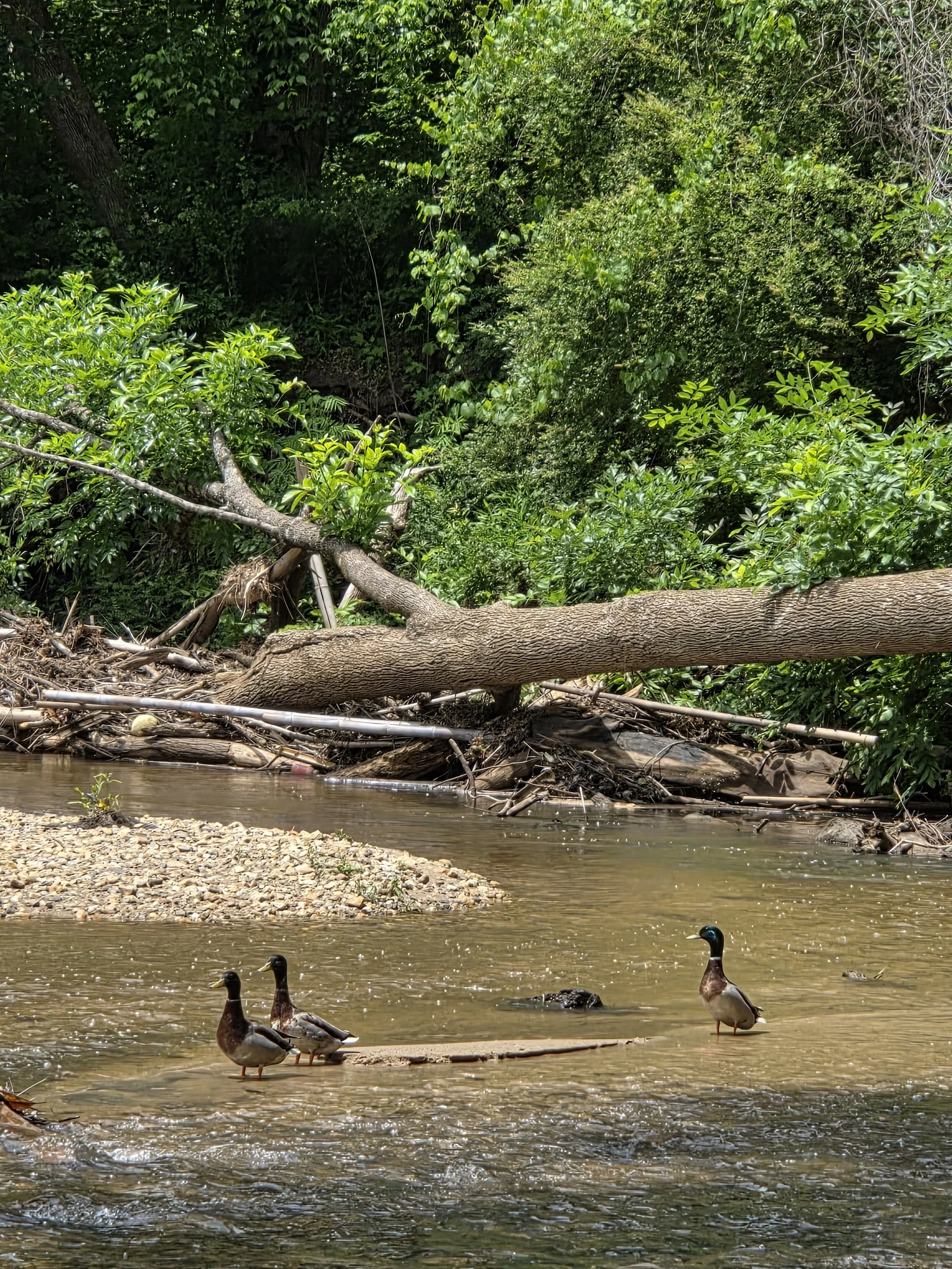
Ducks enjoy an outing in the South Fork creek.
Are there any particular challenges the park faces in terms of its maintenance or environmental health?
There are no major challenges, but a lack of volunteer participation inhibits the work we can do in the park.
How can people get involved?
We have a volunteer day, which is the 1st and 3rd Tuesday of the month at 9am. We primarily cut privet and honeysuckle bush that the Atlanta Zoo picks up to feed the animals. We generally have the same 4-6 people each time. If someone would like to become involved, they can send me an email.
For more information email Pete Densmore at petedensmore124@gmail.com or visit southforkconservancy.org/zonolite.
By Fran Putney, Board Member